Author: admin

  • Last opportunity to pledge for Midland!

    Hi everyone, 

    just a quick one to let you that the Midland funding drive will formally end at midnight on August 14th. The book is finished, proofed and copy-edited, the cover is designed and finalised, the blurbs are written, and soon the whole package will be sent off to the Unbound mountain to be carved into giant marble tablets for our descendants to ponder and squabble over for aeons to come.

    So if you’d like your name to be included in the great list of pledgers that will be memorialised in the back of the book and worshipped down through the ages, now’s your last chance! Pledge now, any pledge will do, and your name will be sent to the man with the chisel. After midnight on the 14th, though, while you’ll still be able to pre-order a book, it won’t count as a pledge, and you will not be included in the roll call of those who helped midwife the great work that is Midland.

    (Tip: as well as the marble version, there’s also a paper version that will be printed in October, and which would make a great Christmas present, especially if you buy it on behalf of a loved one and ask for their name to be listed in the back of the book!)

    Thanks as ever to all of you for your support to date. 

    Soon Midland will be with you, very soon…

    x

    Jim

  • The intersection of art and science

    Very pleased to see my piece about my experiences on the Springboard Data Science Career Track Course — and the impact of digital on the art/science divide — go live on the Springboard blog, complete with portrait by Sean Geer.

    You can read the piece here.

    Big thanks to all at Springboard, especially Raj, Kane, Jan Zikeš, Janet, Adenika and Julia for all your support throughout the program (and the edit process!); and thank you also to Tabitha Goldstaub from CognitionX for turning me onto the course in the first place. It was an amazing experience, and anyone who’s familiar with the work we’re now doing at Hospify can easily see how transformative it proved to be.

  • My work here is done

    Finally, it’s done. Last weekend I sent over the final round of corrections for the page proofs, and so ended a journey I began back in January 2006, in that dreamy era when Facebook was not yet a thing and Mark Zuckerberg wasn’t a multi-billionaire and social media hadn’t resculpted the media world as we know it. Well, Zuck may have made enough money to make a Rothschild blush in the time it’s taken me to craft and publish this story, but which will last longer: Facebook, or Midland? This remains to be seen…

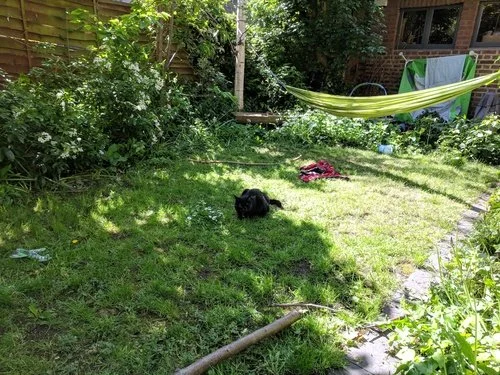
    One of the pleasing things about page proofs, in this world of ubiquitous digital gadgetry, is that you have to edit them on paper. This meant that the final leg of the Midland voyage, the arrival into port, as it were, was able to take place not at my desk, but in a hammock, in my garden, in the sunshine, on the first of the May bank holidays. 

    The cat was helping, as you can see. 

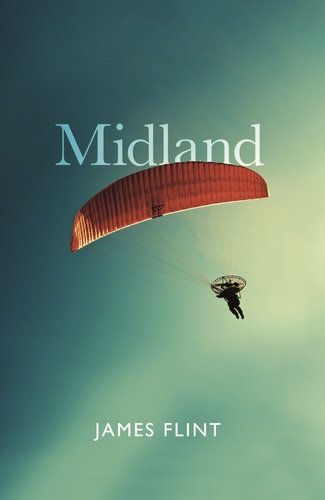
    This means that the book is now really really really done and is being prepared for publication. We decided on the cover too; a slight tweak on one of the ideas I circulated previously. Here it is:

    I love it. I hope you do too.

    And you’ll get your copy soon. Towards the end of this year, or so I’m told. Thank you so very, very much for your patience. We’re nearly there. Just another few months to go. In Internetland, that’s almost enough time for Facebook to collapse back into the dorm room from whence it sprang (if enough of you close your accounts and switch to Hospify). In Bookland, that’s how long it takes to crank out the pages (we do them one by one, by hand). 

    Why do we do that? 

    Because a good book, when you read it, knits itself into your brain and stays with you forever. It’s quite literally character-forming, the antithesis of the ephemeral. And it takes time to get it good enough to do that, to get it to cast that particular spell. So if you’re going to try and do it, you have to try and do it well.

    However long it takes.

    I can’t wait to find out if you think this one was worth the wait.

  • Eating data science for breakfast

    I got up nice and early this morning to chair a data science and data protection breakfast in Soho. Nothing like a sprinkling of support vector machines on your granola and a couple of slices of regulation on the side to get you going on a Friday.

    The event was organised by data strategists the Ammonite Group, and it was Chatham House rules so I can’t be too specific about who was there or what was said. But a really interesting collection of data scientists from various different industries including publishing, motor, gambling as well as straight up tech were in the house, so it was an interesting discussion.

    While each of us was grappling with very different data problems, it was fascinating to discover how united we were by the questions we were asking about the ways in which big data and machine learning models were going to be affected by the arrival of GDPR.

    My own company,  Hospify — which provides compliant messaging for healthcare — is very much predicated on the existence of this piece of legislation. We’re all about making sure that the kind of things we’ve seen happen to people’s Facebook data as a result of the Cambridge Analytica debacle doesn’t happen to their medical data too.

    Handling data in a compliant way is Hospify’s stock-in-trade, but like other businesses we’re looking to wring value from that data for our users by using the latest machine learning tools. The trouble is, the compliance part of the equation makes that very difficult for us to do.

    Machine learning technology — which, beneath all the hype about AI amounts to adding a layer of robust feature recognition (and associated transformations) to the compute stack — is arriving just at the moment that the world is waking up to the ways in which the great open data experiment is making us all very vulnerable to whole new kinds of attack.

    Cybersecurity, however, is just one of the challenges we face. As we know at Hospify, things can be highly secure and still not be compliant, as compliance deals with a whole raft of requirements from data storage, consumer opt-in, subject data access requests and the right to be forgotten, all of which can be problematic for a business at the best of times, let alone when the data concerned have been passed through a machine-learning model.

    And that’s before we even get to the right to explanation. There are already conflicting interpretations about what this even means. If you’ve been turned down for insurance because of a decision that was made by an algorithm, what does having a right to know how that decision was made amount to? Should you be given access to every weight in the matrix of a multilayer neural net, which would not only be hard to deliver but also pretty much meaningless? Or do you just have the right to be told the methodologies involved? And if so, which ones, and to what extent?

    On top of this, the amount of data that the digital operations side of any business needs to retain in order to properly do its job is increasing all the time. User profiles, mobile apps, metrics from IoT devices, APIs and analytics of all kinds are moving beyond the realm of the human and into that of the algorithmic just by dint of the sheer volume of information they generate.

    Equally, and driven by smaller chips, better batteries, the need to remove data bottlenecks, and the security risks inherent in putting any information in transit, more processing power is moving out of the cloud and back towards the edges of the network. This creates challenges of its own around tracking, implementation and security, and is something that I personally am particularly interested in.

    This morning’s conversation ranged across all these topics, and generated useful insights into quite a few of them. As a group we felt that a lot of the demand for “right to explanation” could be satisfied by demonstrating best practice in data collection and pre-processing, and that unpicking actual models might be much less necessary than it initially appears to be.

    Where that wouldn’t be sufficient, there were some innovative suggestions for using input-output correlations to give a very human level of insight into decisions around individual cases. Keeping clear separation, when possible, between customer data and transaction data was another top tip; it was also salutary to hear the extent to which the group felt that the third-party data market was already disappearing.

    One particularly thorny area concerned the tension between the regulatory need to identify problematic customer behaviour in certain sectors, and the need to exercise the right to be forgotten. Another red flag was raised about the dangers of introducing bias into data sets via hidden correlations in otherwise innocuous-data sources — questionnaires, for example, whose question sets inadvertently encourage particular types of answer, or put off particular categories of person. As a former psychology student, I’m very familiar with this particular species of difficulty, and know well how tough it can be to eradicate it.

    Another spectre that loomed over the meeting was the feeling that different pieces of legislation often contradicted one another, making it impossible to be sure that you were complying with everything. We talked a lot about how transparency of process and clear opt-outs/opt-ins for users and consumers would help mitigate the chances of falling foul of many of the new rules, but that in quite a lot of situations best practice wouldn’t really be established until after GDPR was in place and some edge cases had been tested in the courts.

    One question we did settle though, before we went out separate ways: whoever had final sign-off on the GDPR, they probably weren’t a data scientist!
  • Page proofs are here… and early ideas for the cover

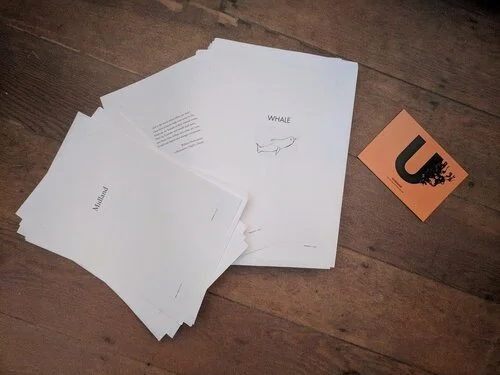
    Page_proofs_20180419.jpeg

    I came home last night to find a hefty package in the hallway… the page proofs of Midland! It’s always an exciting moment in the life of a book when these arrive, as it’s the last chance the author gets to check over the text. It’s both a hello to the book as it’s actually going to look, and a goodbye to the work – when these pages go back along with any red marks I make on them, that really is the end of the story from my point of view. 

    I’ll be reading these over the next week or two and the next reader after that will be you, so get ready. In the meantime, you might like to listen to today’s edition of Radio 4’s In Our Time, which by happy coincidence is about George Eliot’s Middlemarch, one of the inspirations for Midland – the two books share a setting and several key themes.

    When the time comes, you won’t be sent an unruly ream of A4 paper to grapple with, of course. You’ll get the whole package bound up in an ingenious new kind of a folder known as a “cover”. If you’ve ever managed to tear yourself away from your phone long enough to walk into of one of the cutting edge new retail environments called “bookstores” that are beginning to spring up in the hipster districts of international cities like London, Tokyo, New York and Berlin, you’ll have seen covers in action. These deceptively simple-looking devices allow books to sit on a shelf and be carried around without falling apart. They require no charging or batteries, and they offer an opportunity for an enticing representation of the book’s themes and content to be displayed on the front in the form of colourful graphics or photographs known as “cover art”.

    Cover art is a skill all its own, and Unbound’s excellent designers have been working on some ideas for the artwork for Midland. Here are the current two front runners:

    midland1a_-_paramotor.jpeg

    midland1a_-_cords.jpeg

    In the first instance I liked the second of these the most – it’s a beautiful image, and one which resonates with the book in all sorts of ways – but when I showed the two options to various friends last week, nearly all of them found it confusing, because it wasn’t immediately apparent what the picture was of. The overwhelming majority found the first image, of the paraglider, more striking and alluring, which is quite pleasing too, as it was always my own best idea for the image that should sit on the front of the book. I’ve passed the comments back to the Unbound team, which is working on some new versions. If you have any thoughts, please fire them over, and I’ll put them in the mix.

  • Progress report… and moving to Medium

    Hi everyone, 

    as you may – or may not – have noticed, I haven’t posted on this blog for a while. That’s partly because the work on Midland is now tailing off. The book is now funded, of course, so I’ve less reason to bang on about it, and as you’ll know if you read my last post, I put the finishing touches to the final draft at Christmas. Over the last couple of months the Unbound team have therefore been easing the book into the slow publishing production cycle, which has involved a copy edit (now done), some decisions on the font and text layout (also done), and the beginning of work on the cover design (not yet done, but I’ll keep you posted).

    The next step will be the page proofs, which is when I get to read a dummy version of the actual pages as they will be sent to the printer, and get a last chance to pick up on any mistakes. Then, once the cover is approved, the hardback will go to press, and those of you who’ve pledged for one will, I hope receive it around about October. After that the process of page proofs and cover design will be repeated for the paperback, which is due to hit bookshops in January. 

    And what will I be doing all of this time? Not writing very much, that’s for sure (though I do have a thing or two up my sleeve on that front). Nearly all my waking hours are currently being taken up with the launch of the healthcare messaging app Hospify, a project I started a few years back with two surgeons,  Neville Dastur  and  Charles Nduka.

    Hospify has been a slow burn, but with new data protection regulation arriving in May and the Facebook/Cambridge Analytica scandal waking the world up to the importance of personal data security, things are really taking off. The company’s trials in the West Midlands with Unison Healthcare and Birmingham Community NHS Trust, which I’ve mentioned before in this blog, are going great guns. And in an unusually fortuitous piece of good timing, about six weeks ago Hospify was offered a place on the prestigious  Wayra Velocity Health  accelerator programme in London, as a result of which we are now working with Telefonica, O2 and MSD. So that’s all very exciting. 

    As it’s not really appropriate for me to bore all you loyal Midland supporters with tales of my adventures in the wacky world of compliant health chat, I have started a new blog on Medium where I can talk about that at a safe distance. I kicked it off last week with my first post,  Move Slow and Fix Things, and those of you who are interested are welcome to click on the link and check it out.

    Move_Slow_and_Fix_Things.png

    For the rest of you, the ones who’d prefer to stick to purely literary matters, I’ll post the occasional update here about Midland so that you’re aware of its progress, but beyond that I will for the most part now be making space for the book to speak for itself.

    Have a great Easter, thanks again for your continued interest and support, and talk soon.

    Jim

  • The NHS needs best practice guidelines on instant messaging, and it needs them fast

    Hospify’s recent Freedom of Information request reveals that only 2% of NHS Trusts have appropriate policies in place for staff use of instant messaging

    As I’ve  written previously  in this blog the recent news coverage about the Facebook/Cambridge Analytica scandal has left no one in any doubt about the extent to which the internet giants are abusing and misusing their users’ data. However, recent surveys have found that 43% of all NHS staff and as much as 89% of doctors are regularly using consumer tools like the Facebook-owned WhatsApp to communicate at work about patients.

    Instant messaging apps like WhatsApp are popular with healthcare professionals wanting to keep in touch with their teams using their smartphones in the fast-paced environment of a hospital. But these apps do not comply with NHS Information Governance guidelines or the European General Data Protection Regulation (GDPR), which comes into force in the UK, er that’s right: today!

    I’m CEO of an increasingly busy start-up called Hospify, which I co-founded with two surgeons in order to help hospitals and other medical institutions deal with the data compliance pile-up that was going to happen when all those clinicians merrily speeding along in WhatsApp drove smack into the wall of GDPR.

    When we started very few people knew what we were talking about; and even if they did, for the most part they didn’t really care. But over the last year, as a catalogue of data security issues from the WannaCry attack to Mark Zuckerberg’s congressional confessions has danced across the news bulletins, that’s changed. Everyone now knows what the issues are, and everyone now cares — even if we only care to the extent of wanting to rid ourselves of all the wretched GDPR privacy permissions currently clogging up our inboxes.

    Given this shift in sentiment, and given our vested interest, over at Hospify we wanted to find out what guidance there is to help healthcare staff use instant messaging in a safe and compliant manner. We looked first at the policies issued by professional bodies and found that guidance for instant messaging was limited —we couldn’t find anything really specific, and what guidance did exist was generally concerned posting on forums, blogs and social networks.

    We then contacted NHS England and NHS Scotland who both told us they had no centralised instant messaging policy, and that policy should defined by each Trust. So, not to be defeated, a couple of months ago we sent 175 NHS Trusts a freedom of information (FOI) request to find out if they had a specific policies for instant messaging in place.

    The results were extremely worrying. Many Trusts pointed to their existing social media policies and the ones from various professional bodies that we’d already looked at as if they also covered instant messaging, but the vast majority of these were actually concerned with best practice around the publishing of content on social media networks.

    Instant messaging, with its real-time conversations, is more akin to a phone call than a social media post, and mostly takes place in healthcare during a patient’s treatment. Given the nature of the subject matter in these conversations, sensitive medical information is often shared and discussed — information that can then easily end up stored on unregulated servers in countries outside the European Economic Area, where it is vulnerable to abuse and sits beyond the reach of subject data access requests.

    While 60% of the NHS Trusts that we contacted with our FOI request told us they did not have yet have a policy in place for the use of instant messaging by staff, only 2% of Trusts had actually issued specific and relevant guidance. The other 38% seemed for the most part to be under the impression that their existing policies requiring patient details to be anonymised when posting to social media covered off all data protection issues, without really appreciating that when it comes to instant messaging, anonymisation is very difficult to do in an effective way — and that even when done correctly introduces significant risk of patient misidentification into staff communications and so creates other liabilities.

    The Information Commissioner’s Office (ICO) has given clear guidance on the use of messaging apps, but the guidelines from the Department of Health, NHS England and NHS Digital remain confused. GDPR is finally here, and if clinical staff are to avoid disciplinary action over inappropriate use of messaging and Trusts are to avoid fines of up to 4% of their annual turnover for any messaging mishap that can be classified as a data breach, clearly much more needs to be done to get appropriate instant messaging policies in place and disseminate best practice guidelines.

  • Move Slow and Fix Things

    Hospify — the compliant chat and data company I founded with two surgeons four years ago, in anticipation of the current storm over widespread data abuse

    Hospify — the compliant chat and data company I founded with two surgeons four years ago, in anticipation of the current storm over widespread data abuse

    I’ve been meaning to blog about my role as CEO of  Hospify for a while now, and the events of the last week or two have convinced me that now’s the time to do it. The exposé of the data abuse conducted by Cambridge Analytica, and its impact on the business models underpinning Facebook in particular but also Google, YouTube and many other digital businesses have underlined the reasons that we founded company in the first place.

    I’m often asked what a journalist is doing running a health chat company, and the Cambridge Analytica story allows me to answer that question very neatly. Besides being a writer, I’d always had a strong interest in technology and like many proto-geeks of my generation did a lot of coding as a teenager thanks to the advent of home computers like the ZX81 and BBC Micro.

    I got my first career break — an editorial position on Wired UK back in the mid-nineties — by combining these two interests, and although my career has ranged fairly widely since, these two things have always remained close to the heart of everything I’ve done.

    After Wired I worked at the BBC for a period, building an early social network based around a TV drama. When that project was killed by the September 11th attacks (long story) I migrated to the Telegraph, where I looked after, by turns, online digital development, online video, and the Telegraph Weekly World Edition newspaper — for which I also built a social network, this time for British Expats.

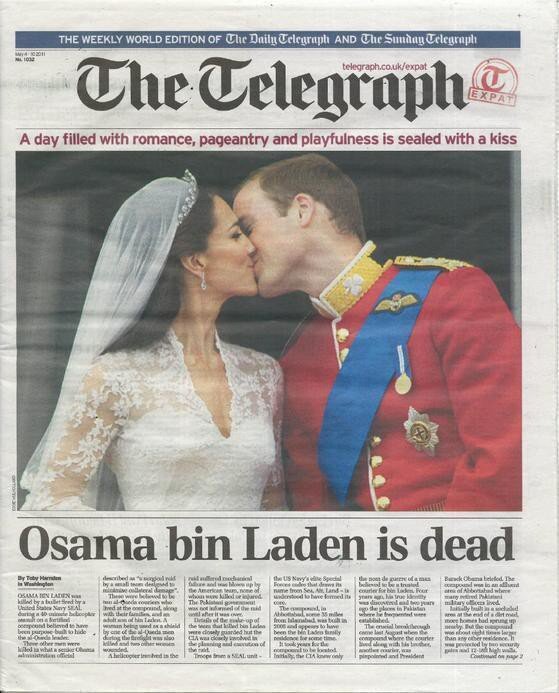
    My proudest moment at the Telegraph Weekly was producing this: a front page that The Atlantic and The Huffington Post deemed “the greatest newspaper front page ever”

    My proudest moment at the Telegraph Weekly was producing this: a front page that The Atlantic and The Huffington Post deemed “the greatest newspaper front page ever”

    My career has, therefore, always been about both content and its expression, “expression” at this particular period in history meaning the internet, the web, social media, and — latterly — mobile, which combines all these things in the almost magical devices that billions of us carry with us everywhere, all the time, and use to mediate all aspects of our lives.

    I was at the Telegraph long enough to earn a coveted window seat, and when I looked out of that window what I saw was Google, whose offices were right across the street from mine. Because every time I looked at my computer I saw Google too, it followed that I should spend quite a bit of time in those offices, which I did, generally discussing the finer details of Search Engine Optimisation (SEO), then in its infancy but still of considerable importance to a newspaper group.

    While the Telegraph initially did well out of the web, as time went by that success began to wane. This was partly as the result of poor strategic decisions by senior management (don’t get me started), but also because the media as a whole and newspapers in particular were being reconfigured by the exponential expansion of Google, Facebook and others, especially as the world began the shift from the desktop to the phone.


    The Block — a valiant attempt to build a social network around a TV drama four years before Facebook (and decent broadband penetration). Set in a 1 kilometre-high tower, the project was shelved by the BBC in the wake of the 9/11 attacks.

    Sitting in that window seat between 2009 and 2012, it became ever more apparent to me that content was becoming increasingly commodified and that I should put more focus on the expression side of my equation if I wanted to stay remotely relevant. It also became clear to me that this data pact that consumers — and, indeed, the newspapers, themselves — were making with the new tech giants by handing over detailed information about their personalities and habits in return for “free” online services was deeply problematic, not least because of the effect it was having on the economics of my own industry, which I witnessed in a very literal way as month after month more of the excellent journalists who sat all around me got laid off. But it was a new world, everyone wanted to try it out for size, and the services were so good that no one really seemed to care.

    Still, I felt that change was coming one way or another, so when the cutbacks reduced my own team to the point where I felt we could no longer put out a quality product, I left the Telegraph to focus more on online video. When that didn’t work out (another long story) I was contacted by two surgeons, one of whom I’d known since university, and ask to bring my media tech experience to bear on an idea they’d had for improving comms in health.

    I didn’t know too much about healthcare as an industry, but my undergrad degree was in experimental psychology and I’d just spent a decade helping my father through an extended battle with chronic lymphatic leukaemia, so the area wasn’t completely alien to me. I did some research and it was soon obvious to me that not only could the kind of consumer messaging and social media tools provided by the likes of Facebook and the companies it had acquired — notably WhatsApp and Instagram — make a huge difference to efficiency in the provision of healthcare, but that here was an area where, however blasé they were in other areas of their lives, people really would care about what happened to their data.

    I therefore threw my lot in with the surgeons, Neville Dastur and Charles Nduka. We talked to the Information Commissioner’s Office, looked at the data protection legislation in health, did a lot of market testing, reviewed the General Data Protection Regulation that was due to come down the line from Europe (and is due to arrive on May 25th), and built a service with an innovative, data compliant architecture for handling chat and data that provided both with best practice, transparency and simplicity for users and employers — without being funded by sharing personal information or serving ads.

    For much of the three years it took us to do this, most people we spoke to told us we were wasting our time, that the service wasn’t necessary, that people didn’t care, that the big companies would surely beat us to it. But our service went live in the Apple and Android app stores in February, and a few weeks later we’ve seen $50bn wiped off the value of Facebook as the extent of the data misuse enabled by its service has become incontrovertibly obvious to everyone.

    In the meantime, Hospify is being all but overwhelmed with enquiries from clinicians, Trusts, unions and chief information officers, app downloads are increasing every day, and several of the big companies that were perceived as such a threat are now instead in the midst of legal, political and cultural firestorms over the chaos that their lax attitudes to handling data have ignited.

    Into this mess rides GDPR, which is looking extraordinarily relevant all of a sudden. It’s true, of course, that regulation doesn’t change things on its own. The Equal Pay Act of 1970 years ago demonstrates that. It’s only now that the #metoo movement has amplified the frustration of women sufficiently (thanks to social media for once acting in the way it was supposed to) that we’re seeing companies opening up their books on the gender pay gap, and change is actually starting to happen.

    So it goes with data privacy. GDPR on its own could easily be in large part ignored. But when week after week we’re hearing about the awful implications of not taking due care over data, revelations that are coming out as a result of the tireless work of reporters such as the Guardian’s Carole Cadwalladr, who I’m proud to say that I know from my time as journalist (and who deserves to pick up a slew of awards for her efforts), we’re seeing not just regulatory change, but culture change too. And the combination is all but unstoppable.

    We are therefore, I believe, about to enter a new era of data compliance. It’s the era we built Hospify for. Yes, it’s taken a while, but good things take time. Unlike Mark Zuckerberg, who extolled his team to move fast and break things until, alas, they ended up breaking democracy, Hospify’s approach is somewhat more measured. “Move slow and fix things” pretty much sums it up. This is not advertising we’re talking about. It’s health. Mistakes have very real consequences, for very real people. You can’t muck about it with it. It really is life and death.

    So join us! Change will ultimately only come if you, the user, demand it, and choose the tools that help you to enact it. Be the change you want to see in the world, as we have tried to do. Hospify is just one of many other great tools coming through that put data compliance and privacy at the heart of everything they do. Seek them out, use them, tell your friends about them. Because information might want to be free — to quote the Wired axiom from my old dotcom days — but as is now abundantly clear, someone always ends up paying.

  • Happy new year, from Midland

    A couple of months ago I had the final set of editorial notes on  Midland  from my editor at Unbound, Rachael Kerr, and I’ve spent the relatively distraction-free lull between Christmas and New Year working hard on the final draft. It’s always tricky to know when you’ve finished a book, especially one that’s taken twelve years to write, but I’m pretty sure that it’s now done.

    There were quite a few last minute tweaks and tidy-ups, but the major change from the draft I completed last year is (surprise!) a new ending. Yep, that’s right. If any of you happened to read the version I made previously available in PDF form through this blog, then you’ve got a fresh read in store (or at least a fresh final chapter) when the printed book arrives in September 2018 or thereabouts. 

    Here’s a picture of a Midlands snow lady, constructed last week in Warwickshire, to celebrate:

    Snowman.jpeg

    The new draft will go to Unbound on January 8th, and then will enter the publishing process: copy draft, typesetting, cover design, marketing plan, print schedule etc etc. This all takes about nine months (and explains a lot about why the world has largely switched to digital media; dead tree distribution takes tiiiiime). As noted above, if all goes according to plan, you should all get your hardbacks (and/or ebook editions) sometime in October, and the paperback version will arrive in the bookstores courtesy of Random House, about six months after that, in Spring 2019. 

    In other words, we’re only at the end of the beginning. The real life of Midland doesn’t even start for another nine months, and I’ll be organising the launch party to coincide with that (so those of you who were generous enough to book tickets, expect an invite from me for some time around then). In the meantime I’ll be getting cracking on the other pledge fulfillments, in particular the tour of Warwickshire and the paramotoring trip, both of which will probably take place sometime this summer (and there will be full reports posted on this blog when they’ve happened).

    2018 is going to be a Midlands year for me in more ways than one. The novel is in large part a paean to my Midlands childhood, and what’s been peculiar about it is that, as I’ve been finishing it, work has taken me regularly to the Midlands for the first time in my career.  Hospify, the healthcare messaging start-up that I’ve co-founded, has been undergoing extensive trials in the Birmingham area over the past few months, and just before Christmas we had the good news that these trials are set to expand into the new year, so I’m going to be in the area a lot. 

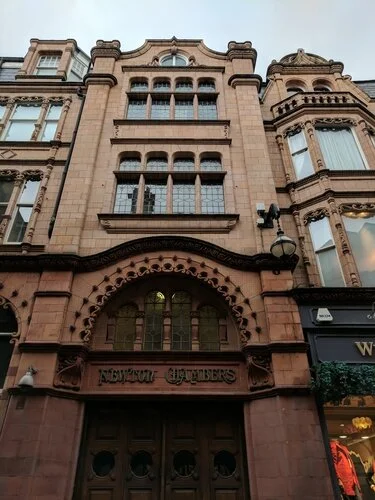
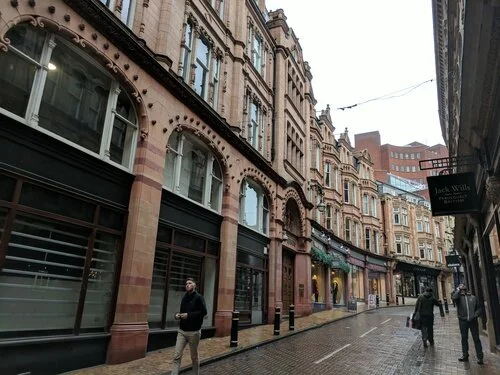
    Back in September I found myself with a couple of hours to kill in the city centre while waiting for a train, and I took the opportunity to have a wander around. Things have certainly changed since I was a boy, when my father would occasionally take me to spend a day in the offices of his law firm, then called Duggan Lea & Co, if there was no one else to look after me during the school holidays. 

    Cannon St 1.jpeg

    Duggan Lea’s home was what I still think of as one of the loveliest buildings in Birmingham: the art nouveau Newton Chambers in Cannon Street. The building has been cleaned up and converted since my father worked there, and is now a plush apartment block, but back then it was covered in soot and cascades of pigeon shit, and felt very Dickensian, as did Cannon Street, which is now all fancied up and pedestrianised but back then was quite a dour, traffic-clogged little cut-through. I loved the building though; its wide staircases, corridors and hallways were the perfect assault course for a nine-year-old boy, and I still remember the ozone smell of the photocopier room (yes, the photocopier took up an entire room), where I often spent entire mornings making dozens of copies of terrible pictures I’d drawn, humoured by the legal secretaries who were pleased to have me out from under their feet. I also saw my first word processor there, an item the size and shape of an electric organ, that displayed a single line of text at a time on its tiny LED screen – a universe away from the laptop on which I’m typing this now.

    Cannon St 2.jpeg

    One room that often pops into my mind when I’m thinking about how to design some piece of cloud-based data architecture to perform some online job or other is Duggan Lea’s basement archive, a dusty room filled with cobwebs, mouse nests and rack upon rack of contracts and case notes, all rolled up in buff card folders and bound around with mauve or burgundy ribbon. It was a scene straight out of Bleak House, which I read around that time, and the experience of visiting those impenetrable stacks combined with the overwhelming futility of the proceedings of Jarndyce & Jarndyce to instil in me a Kafkaesque view of the workings of the law, a faith in the potential of computerisation to improve data storage, and a love of good writing, all at the same time. I think these three things have formed a close alliance in my consciousness ever since.

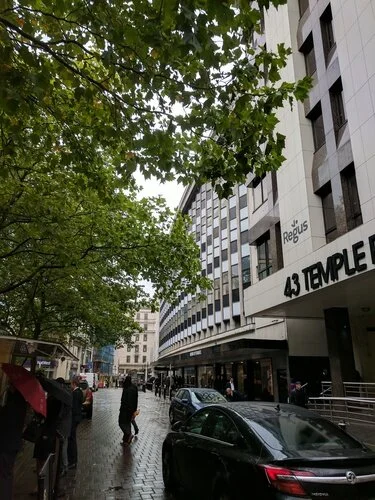
    Another building I visited was Rackham’s, now House of Fraser, seen in the righthand background in the picture below. Still a striking piece of modernist architecture, it features in Midland when Margaret agrees to meet Tony there, in the tea room, for a conciliatory post-divorce talk in 1968 (the year of my birth, by non-coincidence). 

    Rackhams.jpeg

    Fading now, like so many of the concrete buildings of that era, it’s still worth remembering what a powerful effect that wall of concertina-ed windows had on the city centre in the 1960s, and what a positive contrast it, and the goods on offer within it, presented to the citizens of what was a grimy, industrial town still dealing with bomb damage from the Second World War. It was a view of the future that Margaret bought into, at any rate.

    By the time I was visiting Newton Chambers in the late 1970s and early 1980s, that dream was already under threat from the slowdown in British manufacturing and the various industrial crises this precipitated. The concrete revolution that had created Rackham’s had also wrapped Birmingham in expressways, of which the famous  Spaghetti Junction  was the zenith (or perhaps the nadir). The city centre began to suffer from most of the urban ills that characterised those decades, and had become a tough place for a boy to be. Going into Newton Chambers as a little kid with my Dad during the school holidays was one thing; travelling in on the train on my own or with a friend on a Saturday as a teenager, to source back copies of 2000AD at Nostalgia & Comics or clothes at Oasis, and braving hostile gangs of skinheads in order to do it, was another. It wasn’t really until the 1990s that Birmingham would start to feel like a vibrant and hopeful place once more, largely thanks to the efforts men and women like my father made to rebuild and improve the institutions that would reknit the town’s civic fabric. 

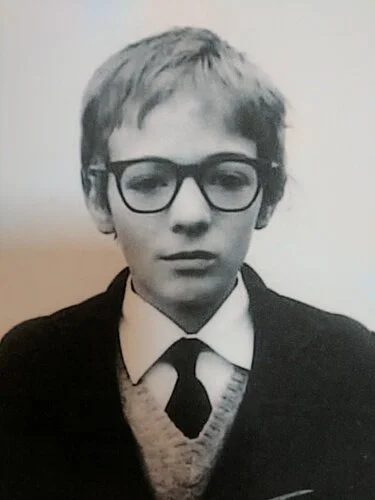
    And in case you’re wondering what I looked like in those days, I went to a school reunion last year and was presented with this:

    Jim at school.jpeg

    As you can see, I was already working hard on projecting authorial angst, even at that tender age.

    Here’s a selfie I took this morning, roughly four decades later, sporting the new glasses I’ve had to buy recently for driving (I had my eyes lasered in my 30s, and haven’t worn specs for around 15 years).

    Jim with beard.jpeg

    Plus que ca change plus c’est la meme chose.

    And with that thought, I wish you a very new year to you all, and all the very best for 2018.

  • Habitus histories – fabulous fanmail and peculiar premonitions

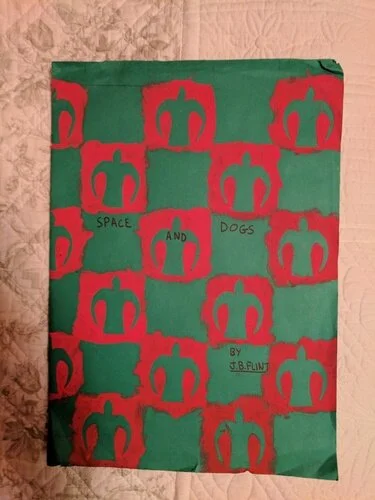
    Space and dogs cover.jpeg

    I know, I know, I haven’t posted for a while. I’ve been very fully occupied getting  Hospify  up and running now that we’ve closed seed funding and pushing on with my  machine learning course, about which more at some point in the not-to-distant future, though the future never seems very distant, these days. In fact, it seems like it’s been here for a while.

    But in the midst of all that, book stuff  has  been happening. I spoke to my lovely editor Rachael today; she’s nearly finished her notes on the latest draft, and once I’ve got those I’ll be taking a few days out some time in November to work through them and put the finishing touches to Midland. I’ll also be trying to sort out dates for the launch party (September 2018?)  and for next year’s crazy paramotoring trip, to be attended by the select few of my pledgers brave (or foolhardy) enough to sign up for that option.

    While Midland has been gently percolating there has also been a little bit of activity around my first novel Habitus. In a pleasingly circular turn of events, my editor – the aforementioned Rachael – did the publicity for Habitus way back in 1998 and now, nearly two decades later, her efforts and mine long since mere marginalia in the annals of publishing history, out of the blue I recieved  a rare  piece of  Habitus fanmail:  an email from a young French music composer  who’d read the book a few years back when still a teenager. It had stuck with her  and inspired her to write a piece of music, which she wanted to share with me. It’s pretty good, so in turn I’m sharing it with you. You can listen to it  here. Look out for the name Yannis le bègue. Could be a rising star…

    A couple of weeks before that pleasant surprise  I’d been back in the Midlands running a trial for Hospify. I stayed at my mother’s place a few times – she still lives in the area in which Midland is set – and while I was there she handed me something she’d found in the bottom of a wooden chest while having a clear out. 

    It was a school project I’d done when I must have been around the same age my own kids are now (six and nine). I recognised it when she gave it to me, but until then I’d had absolutely no memory of having done it at all. What is completely extraordinary about it, though, is that it covers precisely the theme of Habitus, which I wrote in my twenties. To wit: space and dogs, as you can see from the photo of the project’s cover at the top of this post.

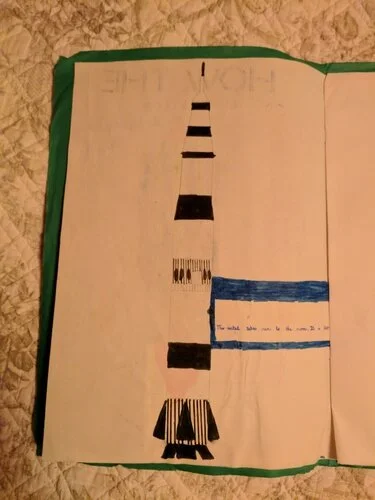
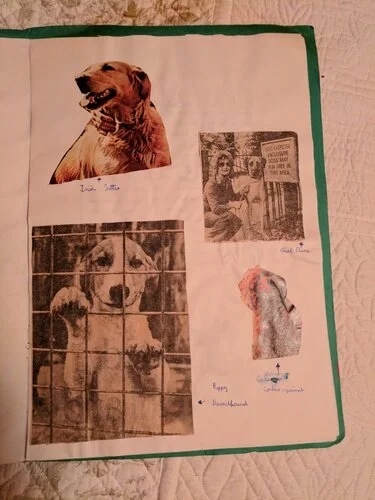
    Obviously the combination of space and dogs appealed to me as a child, appealed to me in my twenties, and – I guess – still appeals to me now. I’m not sure why that should be. But clearly my subconscious was dictating my actions during both of these publishing projects. Here, for example, is a picture from the school project:

    Space and dogs rocket.jpeg

    And here is a picture from Habitus.

    Sputnik_Vehicle.gif

    School project:

    Space and dogs - dogs.jpeg

    Habitus:

    Habitus_paperback_cover.jpeg

    I didn’t design the cover of Habitus, of course; but nor did the designer see my school project which, strangely, despite being all about space and dogs, does not mention that most famous of space dogs, Laika – or indeed any of the dogs that went into space. (In case you haven’t read it, Laika is one of the main characters in Habitus. Perhaps that whole book was my way of making up for the glaring omission I’d made, many years before).

    All very odd, all very peculiar, and all proof – if any were needed – that very little of what we write or, indeed, of what we do, comes from our conscious mind at all. But none of this is as peculiar, I think, as the last detail, the final concidence. There was another cover of Habitus, the hardback cover, a poster of which is hanging behind me right now on the wall of my office. This was designed by the hugely talented Josh On, a great designer and great friend whose name is included (twice!) among the list of the pledgers for Midland. Josh hadn’t seen my school project either, hadn’t seen the red and green potato print checkerboard that my six-to-nine-year-old self had for some unfathomable reason decided was appropriate window dressing for a book about dogs and space. 

    And yet this is what Josh came up with, for the original cover of Habitus:

    Habitus_20080513.png

    Freaky, huh?

    I thought so…